

YOLO Charters · Yacht Owners · 1 October 2026
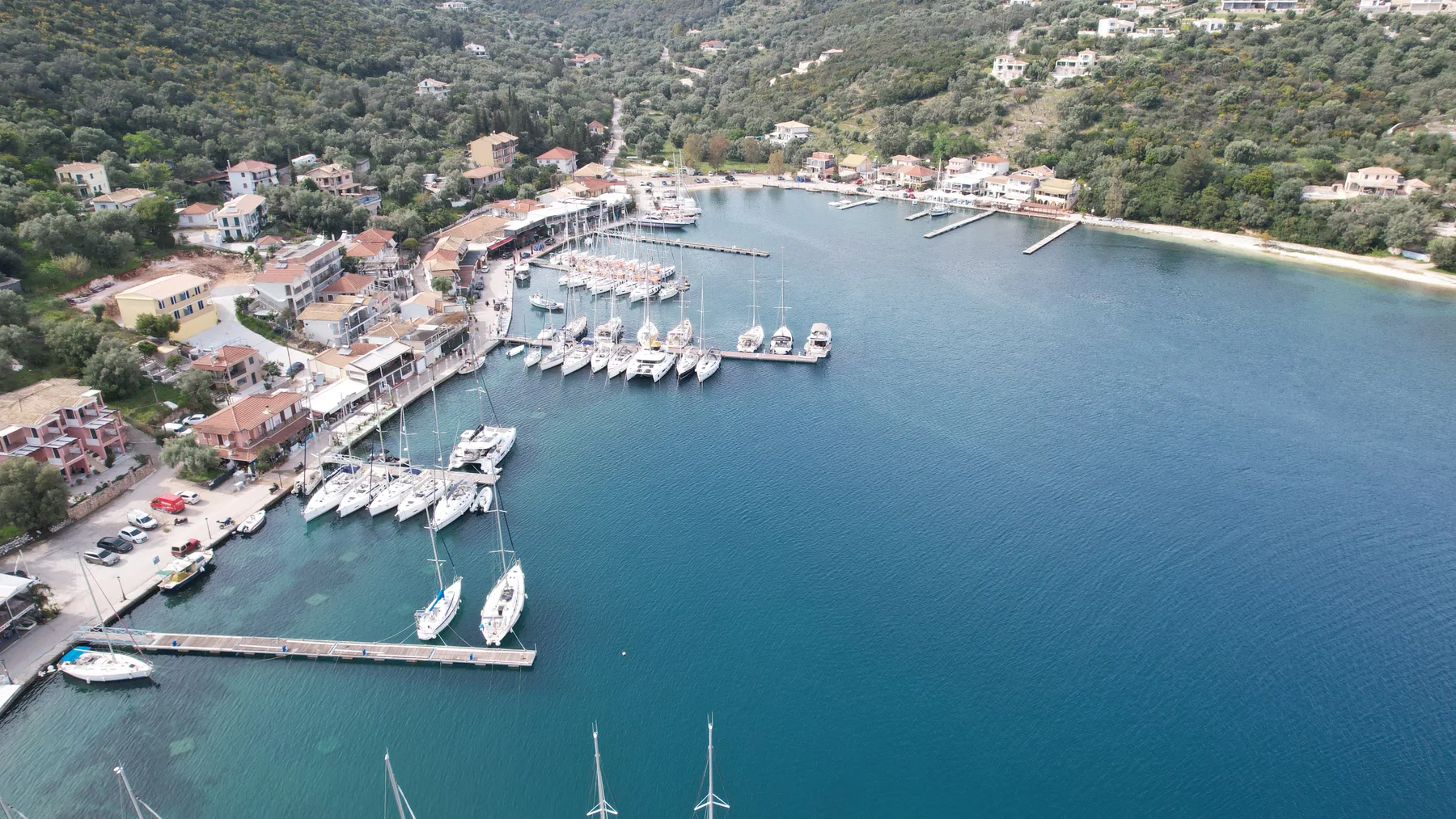
Cover: Sailing yachts moored in the harbour at Sivota, Lefkada, in the Ionian. Photo: YOLO Charters photo library.
Putting your yacht into charter means handing her to people you will never meet. So before owners ask anything else, they ask three quieter questions: who will sail her, will she come back as she left, and will I see where the money goes? This guide to yacht charter management in Greece answers each one from our base in Preveza, where a diver films her underwater hull after every charter week.
This guide describes services, not returns. It covers bareboat sailing yachts and catamarans, chartered with or without a skipper, not crewed superyachts or motor yachts. We manage your yacht for your account under a written management agreement, and your agreement governs. We do not sell yachts or act as brokers, and nothing here is investment, tax or legal advice or a promise of weeks, income or returns.
Three questions owners ask first
Each answer is a routine we follow, set out in full below.
Who sails her?
Crews whose skipper’s licence, ID and crew list we ask for before they travel, who are checked in by our own team, and who can add a professional skipper if they want one.
Will she come back as she left?
At every Friday return a diver films her underwater hull. We never hand her to the next crew without that video, and damage found is documented before they board.
Where does the money go?
We handle the charter money for your account and pass your share on with a statement. Every expense carries its receipt, and you can follow each charter and expense in your owner portal.
Who sails your yacht
This is the first fear most bareboat owners have. Your yacht will be sailed by guests who skipper themselves, or by a professional skipper they hire. No process turns a stranger into you, but a good manager makes sure the people who take her out are known, documented and briefed, and that her condition is recorded at both ends of their week.
Guests who would rather not skipper can ask us to arrange a professional skipper, subject to availability, and your owner portal shows which weeks have one.
Before they arrive
Through their Guest Dashboard, charterers can send us the crew list, the skipper’s sailing licence (and a second skipper’s, where there is one), ID documents and the charterer’s details before they travel. Those details feed the Greek e-charter declaration, which is filed in the state system, and we record its number against the charter. We confirm that the charter is paid before the yacht is handed over. Our guide to the YOLO Guest Dashboard shows the guest’s side.

A charter week at our Preveza base
Our own fleet sails from Preveza Main Port, and a managed yacht follows the same Saturday-to-Saturday week. The work that matters happens in the hours between one crew and the next.
Friday by 17:00, back at base
The crew brings her back, and she is refuelled at the dock by fuel truck, at the charterer’s expense.
Friday afternoon, the diver
She is filmed below the waterline, and her tender, mechanical systems and equipment are checked.
Saturday 09:00, check-out
Our team checks her against the inventory and her recorded condition with the departing crew; any new damage is recorded, and any deposit deduction is discussed before both sides sign.
Saturday, the turnaround
Cleaning and laundry crews that we organise go through her, and clean linen comes aboard, tracked piece by piece between the yacht, our store and the laundry. Gas, small consumables and the inventory are restocked, and she gets a technical check, with small repairs.
Saturday 17:00, check-in
New guests are welcomed, the charter papers and port authority formalities are completed, luggage goes aboard, the cabins are made up and, with her diver video already in our archive, the yacht is handed over.
During the week
Our team supports the guests during the charter and looks after the yacht whenever she is in our home port.
None of this is unusual on paper. The difference is whether it happens properly every Saturday, in midsummer heat, with the next crew on its way, which is why we record it, and why each booking, settlement, expense and repair reaches your portal.
The handover
Check-in and check-out are done by our own team, not a subcontractor, against the yacht’s own inventory and her recorded condition. Where we use our digital check-in, it records her condition in photographs and ends with signatures that guests can give on their own phone. Signed documents are kept unchanged, and our handover checklist shows the routine from the guest’s side.
During the week
On the water, our support RIB can reach a yacht for coordinated customer support when location, weather, sea state and availability allow; it is not a rescue service. Where our team sets one up for the booking, the security deposit is held on the guest’s card and, after check-out, released or partly captured with a stated reason.
Our base ashore
Our base sits on Leoforos Eirinis in Preveza town, a different place from the berth, and guests receive their meeting point with each booking. Inside are lounge seating, a shared table and a kitchenette area. You can step inside our Preveza base or read why guests like starting a sailing holiday from Preveza.

The diver and the video: how every charter week ends
If you ask a management company only one question, ask what happens under the waterline between charters. Our answer is on film, in our archive.
At every check-out, when a yacht comes back on Friday afternoon, a diver goes down to her and films her keel, hull, rudders, drive and propeller. A colleague checks her tender, mechanical systems and equipment aboard. Every video is kept in our archive.
We never hand a yacht over for check-in without that diver video first. Damage the diver finds is documented before the next guests board: photographed, logged and reported to you. If our inspection misses visible keel damage, that is our responsibility.
Why it matters
The damage that matters most is often the damage nobody can see from the pontoon: a touch on a rock while anchoring, a line round the propeller, a scrape on a rudder. The crew who sailed her that week are the ones who know, and they leave after check-out on Saturday morning.
Found on Friday afternoon, the damage is on record while they are still with us, so it can be raised at check-out, before both sides sign. Found weeks later, nobody can say when it happened.
Over a season, the archive builds into a dated record of her underwater hull, charter by charter, which we can go back to if a question about damage comes up later.
Repairs: a quote first, your approval, safety without delay
After damage, the next fear is a bill that arrives without warning. Our rules are set out in the management agreement, and quotes and approvals run through our system.
You hear about damage after each return, with the photographs and the diver’s findings.
Larger, non-urgent repairs wait for your approval. If a check finds a problem that needs more time, work or parts, you hear about the damage and the extra cost before any work starts. Larger jobs come to you as numbered, itemised offers with VAT shown, which you accept or reject from your owner portal or from our email.
Urgent safety repairs are done at once. If something affects the safety of the yacht or the people aboard, we fix it immediately and report to you promptly: what we found, what we did and what it cost. Anything the charterer’s deposit does not cover is charged to you, with the invoice attached.
Everyday running expenses, such as a broken toilet pump or a call-out for an electrician or mechanic, are paid by us against invoices and shown in your portal with their receipts, as the next section explains. The small repairs our own team makes during the Saturday technical check are part of the turnaround.
Every job is logged with photographs, the hours actually worked and its status, and finished work comes with a completion report. For specialist work we call in trusted mechanics, plumbers, electricians and electronics, refrigeration and fibreglass technicians, on or off base.
Where the money goes
In accounting terms this is a settlement on behalf of a third party: the charter income belongs to the yacht’s owner, and we handle it for you.
The guest pays
Either the charter agent who sold the week, or us directly, for example by card on our website.
The agent keeps its commission
Only on the weeks an agent sells. Weeks booked directly with us carry no agency commission.
We keep our management fee
The fee your agreement sets, on the base your agreement defines.
You receive your share, with a statement
One line for every charter, showing what the guest paid, each commission and what is due to you.
Running expenses are settled openly
Invoices for a broken toilet pump, an electrician or a mechanic are issued to us and we pay them. Each one appears in your portal with its receipt, and we invoice you periodically, so you reimburse against documents you have already seen.
Parts, technical consumables such as oils and filters, specialist work, haul-out and launch, and yard and berth fees are the yacht’s own costs: they are invoiced to you separately, with the supporting documents, not bundled into our management fee.
What you see as an owner: the owner portal
Transparency is easy to promise and hard to check, so every owner we manage for gets a private login to the same system our base team works in, limited to their own yacht.
- Your season: every booked week, and whether it is bareboat or skippered, without guests’ personal data.
- A settlement line for every charter: the charter total, the agent’s commission, payments received, our fee, the e-charter number and what is due to you.
- Booked and collected: what is booked on paper this year, and what has actually come in and is owed now, shown separately.
- Statements: PDF or Excel for any period, and a statement in English or Greek for each fully paid charter.
- Expenses and invoices: every expense with its receipt, proof of every payout, the agents’ invoices, and our invoices, payable online by card, with charter and services documented separately at their own VAT rates.
- Repairs and offers: the repair log with photographs, hours and cost, the offers awaiting your approval, and repairs you log yourself.
- Profit and loss: built from posted entries, not forecasts.
- Your own records: a private section for the costs we never touch, such as your insurance.
- Her position: with a GPS tracker fitted, a private map with her current position, her recent track and the weather where she is.
What the portal does not do
The map is for information. It is not a navigation or safety system and has no anchor or navigation alarms. If a tracker reports that her battery supply has dropped too low, the alert goes by email to our base managers, not to you. And a portal does not replace a conversation: if a statement needs explaining, ask us. Existing owners can sign in to the owner portal.
How yacht charter management works in Greece
Full management means we run the charter business of the yacht you already own, new or used, for your account under a written yacht charter management agreement: we market her, take the bookings, conclude the charter agreements on your behalf, look after her between charters and account to you for every week. You can check each charter, commission and expense in your portal.
Commercial
Marketing, price lists, photographs and website presentation, enquiries and reservations, distribution through the charter industry’s main booking systems, communication with agents and guests, and berth arrangements.
Administrative
Charter agreements, port authority formalities and embarkation papers, payment follow-up, confirming that each charter is paid before departure, insurance claim files, and management reports in season and through the winter.
Technical, in season
Check-in and check-out to documented procedures, the inventory, electrics and pumps, standing and running rigging, the engine oil level before each charter, batteries, lines and fenders, bilges, cleaning and ventilation.
What stays with you
- Title and flag: the yacht remains yours.
- Your company’s affairs: your company’s own registrations, tax filings and accounts stay with your own advisers.
- Insurance: you hold all-risks cover with a charter clause that extends to charterers; we prepare the claim files.
- Licences and certificates: you supply them, and we help you obtain and keep them.
How we price and market your weeks
Selling weeks is the commercial side of yacht management in Greece, and the side owners see least of.
A person sets the price. We pay for market data and follow, week by week, what comparable yachts ask and how many of their weeks already show as booked. Our software makes suggestions; one of our team questions them and decides. The data informs the price; it cannot promise a higher one.
Thousands of charter agents can sell her. She is listed on the charter industry’s main booking systems, where agents can offer her to their clients week by week, alongside our own sales.
Guests can book her directly. Our website shows live prices and availability, and guests book and pay online by card, with a first payment to confirm the booking, the balance before departure and automatic reminders.
A proper listing. Curated photographs, descriptions in English and Greek, instant online offers and PDF brochures, with every enquiry logged and followed up.
Advertising and content. She appears in our Google and Meta advertising catalogues, and destination pages such as Preveza yacht charter and our Ionian charter guide bring charter guests to Preveza. We do not promise a level of advertising spend or reach.
Extras for her guests. If you add a paddleboard, a kayak or snorkelling gear, we store it with her equipment, record it in her inventory and hand it over to each crew.
Under full management, setting the rates is our job. Her prices are public on our website, and each booking appears in your portal with what the guest paid. What we will not do is promise a number of weeks, a level of income or a price. If anyone does, ask what the promise rests on.
Winter storage and maintenance: the winterising programme
Winter is when a charter yacht is either put right or slowly neglected. When the Ionian sailing season ends, she goes ashore at a partner yard in the Preveza area, supervised by our team, and her loose equipment goes into our store. The work follows a coded task list agreed with you and confirmed once we have inspected her, and the yard fees, her length of stay and her insurance cover ashore are confirmed in writing. The programme, grouped by area rather than by order:
Hull, yard and finish
- Transport to and from the yard, with lift-out and launch supervised
- Engine and generator (where fitted) cooling circuits flushed with fresh water as she comes out
- Underwater hull sanded and freshly antifouled
- Anodes replaced, and every thru-hull checked and polished
- A full polish of the yacht and her stainless steel
Sails, deck and rig
- Sails washed, taken down and stored, then bent on again before launch; bimini and sprayhood stored; furler drum serviced
- Rig measured with a tension gauge and tuned for rake, prebend and tension
- Winches and windlass motor serviced; anchor chain cleaned, checked, painted and marked
- Steering, blocks, stanchions, guardrails and wind instruments checked; rope clutches lubricated; ropes washed; fenders stored
Systems, electrics and plumbing
- Voltage measured for the bank and each battery, with a status report sent to you
- Batteries fully charged every month, and a diagnostic check before the season
- Bulbs and navigation lights checked, and replaced where needed
- Electric toilets taken apart, cleaned and refitted; waste and fresh-water lines, membranes and circuit cleaned
- Bilges and floorboards cleaned, with odours removed
Safety, storage and winter watch
- Safety gear counted, checked and stored; EPIRB and liferaft checked; extinguishers recharged; first-aid kit restocked
- Annual certificates handled, including the general inspection and radio certificates
- Loose equipment kept in your own cage in our store, counted in and out; dinghy cleaned and stored, outboard serviced and stored, both refitted before launch
- Monthly ventilation, moisture absorbers and leak checks at portholes and decks all winter; hatch seals lubricated, and lockers and catches put right
Not included, and quoted or invoiced separately
- Main-engine service, from oil and filters to saildrive or gearbox oil, seals, coolant, belts and impellers, by an authorised engine mechanic
- Parts and consumables, including normal-wear parts and the outboard’s routine consumables
- Yard and berth fees: we move her and supervise, and the yard charges for its own services
- State fees for the annual certificates, although we handle the paperwork
- Delivery fuel and skipper, repairs away from base, outside contractors, and on-request extras such as a watermaker service
The programme assumes a yacht in normal condition. Anything that needs more time, work or parts reaches you, with its cost, before the work starts, and each task is logged with photographs, so in spring you can see what was done. For owners comparing winter yacht storage in Greece, that is the difference between a yacht parked ashore and a yacht looked after ashore.
Monohull or catamaran: what changes in the care
Catamaran charter management in Greece follows the same week and the same winter, but a catamaran asks for more in places.
Sailing monohull
- Typically one engine, one drive and one propeller below the waterline
- The keel takes the knocks of a misjudged anchorage or a touch on a shoal, which is why it heads the diver’s list
- Her size, draft and weight decide which berths and yards can take her, so we confirm both before she joins
Catamaran
- Two hulls, two rudders and, typically, two engines with two saildrives: two of everything below the waterline for the diver to film, and two engines and drives to service
- More hull area to sand, antifoul and polish, and trampolines to look after
- Her beam decides which berths, lifts and cradles can take her, so we confirm them with the port and the yard first
Both get the same diver, the same video, the same turnaround and the same written winter programme, sized to the yacht. Our own fleet includes both: Lemon, a sailing yacht, and Strawberry, a catamaran, so these are the routines our own yachts live by. What guests choose, and why, is covered in our catamaran or sailboat guide and on our Ionian catamaran charter page.
How to put your yacht into charter
Tell us about her
New or used, tell us her model, year, length and flag, where she is now, and how much you would like to sail her yourself.
We inspect her
We see the yacht, her systems and her papers, agree what she needs to reach charter standard, and check with the port and the yard that her draft, beam and weight suit the berth and the lift.
The management agreement
In writing: the services, our fee and what it is calculated on, how repairs are quoted and approved, your own weeks, reporting and settlement, the term, and the joint inventory and condition when she is handed back.
Registration and certificates
We help you register her as a professional pleasure yacht in the Greek electronic register and, for an EU or EEA flag, obtain the safety certificate from a recognised organisation. The owner also needs a Greek tax number and business registration; your lawyer and accountant confirm the structure.
Insurance
Your policy is endorsed for charter use, with cover that extends to charterers.
Photos, listing and portal
We photograph her, write her descriptions in English and Greek, list her and open your owner portal, with a GPS tracker fitted if you want her on the map.
Ready for charter
She joins the Saturday rhythm of our base, and each charter she makes appears in your portal as its own settlement line.
Allow time, because registration and certificates are usually the slowest part. Next season’s weeks go on sale long before it starts, so it helps to begin early. See when guests book their charter.

Yacht charter management: frequently asked questions
Why base a charter yacht in Preveza?
Preveza Main Port is our home port, our team and our own fleet are here, and Aktion airport (PVK) is about 7 km from Preveza. Winter haul-out is close by, at a partner yard in the Preveza area, and from here guests sail towards Lefkada and the wider Ionian.
How much does yacht management cost?
It depends on the yacht and the services, so we agree our fee in writing for your yacht once we have seen her. Under our model, the yacht’s own costs, such as parts, specialist work, the yard and the berth, are invoiced to you separately from our fee, with the supporting documents in your portal, and how turnarounds between charters are charged is set out in your management agreement. Whoever you ask, compare what the fee is calculated on, what is deducted before your share is paid, what is invoiced separately and what the winter programme includes.
How many weeks will my yacht be chartered?
No one can promise that, and we do not. Her weeks depend on her price, condition and listing, the season and the yachts competing with her from the same port. What we commit to is the work set out in your management agreement, and you will see each booking in your portal.
Is a charter yacht a good investment?
We do not give investment, tax or legal advice, and we do not forecast weeks, income or her future value; take that question to your own advisers. What we can show you before you decide is how she would be looked after, who would sail her, and how each charter, commission and expense would appear in your portal.
Can I put my existing or used yacht into charter?
Usually, yes. Managing the yacht you already own is exactly how we work; she does not have to be new. We inspect her first and tell you plainly whether she suits charter from Preveza and what she needs to reach charter standard.
Can I still use my own yacht?
Yes. Tell us early which weeks you want for the coming season and we keep them free; otherwise you can use her in any unbooked week, with advance notice, and she should come back clean and ready to sail. Every week you keep is a week that cannot be sold. Private use in a period for which the professional-use reduction on the annual pleasure-yacht levy (TEPAI) was claimed can mean returning that whole period’s reduction, so check with your accountant first.
Who pays for damage caused by charterers?
Damage is documented first: at check-out with photographs, and below the waterline by the diver’s video. Where a security deposit applies, any deduction made at check-out is taken from it, with a stated reason. Larger damage goes through the yacht’s charter insurance, and we prepare the claim file. The insurance excess and wear that no policy covers stay with the owner.
My yacht has an EU flag. Can she charter from Greece?
Generally yes, without reflagging, but only once she is registered in the Greek electronic register of professional pleasure yachts and holds a safety certificate from a recognised organisation. Every charter is then declared in the state e-charter system, and Greek rules expect a minimum level of charter activity from a professional yacht. We help with the process; your lawyer and accountant should confirm the details.
What taxes apply to a charter yacht in Greece?
This is not tax advice. The main questions are VAT on charter income, fees and costs, the annual pleasure-yacht levy, your company’s income tax in Greece and at home, and VAT on buying or importing the yacht, including if a professional yacht later returns to private use. Each depends on the yacht and how she is owned, so take advice before you buy or register her.
Questions to ask any yacht management company
Whoever you choose for yacht charter management in Greece, ask these before you sign. A good manager will answer each one in writing, and so will we.
Whose account?
Is she managed for my account under a written agreement, and who signs the charter contracts?
The fee
What is it, exactly what is it calculated on, and what is deducted before my share is paid?
One example week
Can you show me one agency week and one direct week, line by line, from the guest’s price to my share?
Turnarounds
Who does check-in, check-out and cleaning, what is checked between charters, and who pays for it?
The underwater hull
Who inspects it after each charter, and is the inspection filmed and kept?
Spending
Which repairs need my approval first, how are larger jobs quoted, and what counts as urgent?
Reporting and payment
What will I see, how often, and when am I paid?
Insurance and damage
Who is named on the policy, and who handles claims and guest damage?
Winter
At which yard, supervised by whom, and against what written task list?
My weeks and the exit
How do I book my own weeks, and what are the term, the notice and the condition she must be returned in?
Your yacht will spend her summers with people you will never meet. Choose the manager who can answer, week after week, who sailed her, how she came back and where the money went.
Talk to us about your yacht
Tell us her model, year, length and flag, and where she is now. We will tell you whether management from Preveza suits her, and set out in writing how we would look after her. Write to us through our contact page with "Yacht management" in the subject; our phone and WhatsApp details are on the same page.
This guide describes how we work at the time of writing. It covers bareboat sailing yachts and catamarans, with or without a skipper, not crewed superyachts or motor yachts. It is not investment, tax or legal advice, we do not sell yachts or act as brokers, and it promises no weeks, income or returns. Every yacht we manage is managed for her owner’s account under a written management agreement, and that agreement governs.